

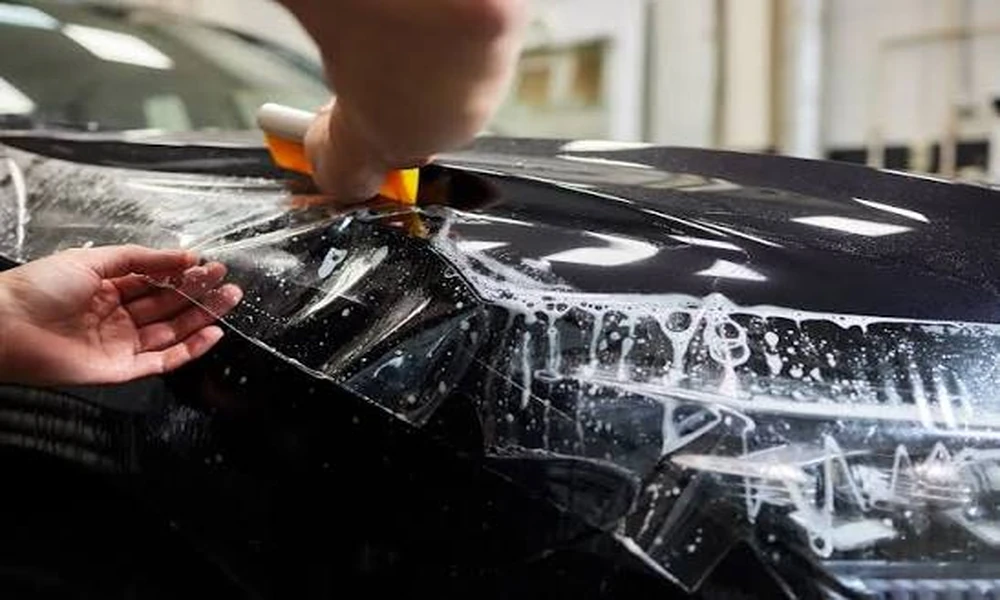
Every detailing shop owner eventually faces the same uncomfortable phone call. A customer whose car was wrapped eighteen months earlier rings to say the bonnet looks yellow, or an edge has started to peel, or there is a faint haze across the doors. The installer did everything correctly. The problem is in the roll.
That is why choosing where your film comes from is one of the most consequential decisions a protection business makes. Customers do not see the brand on the box. They see your work on their car, and they hold you responsible for how it ages.
This guide is written for shop owners and managers who are either choosing a film source for the first time or reconsidering an existing one.
Start With Your Own Business, Not the Brochure
Before comparing suppliers, it helps to be clear about what your shop actually needs.
Look at the last six months of jobs. How many were front-end kits, how many full-body clear installs and how many colour changes? Which finishes do customers ask about most? Are you seeing more interest in white, satin or matte options? Do you install mainly on daily drivers, high-value cars or fleet vehicles?
These answers shape your priorities. A shop doing mostly front-end kits needs consistent clear film at a sensible price. A shop moving into colour change needs a supplier with a reliable range of colours and finishes. A shop serving high-end clients needs top-tier clarity and a warranty that holds up to scrutiny.
What Separates a Reliable Producer
Material quality you can verify
A serious paint protection film manufacturer should be able to tell you what material its films are made from, typically thermoplastic polyurethane, and provide technical data sheets. These usually cover thickness, tensile strength, elongation, adhesive type and UV resistance. If a supplier cannot or will not provide this, treat it as a warning sign.
Consistency from roll to roll
Quality is not just about the best roll you receive. It is about the worst one. Ask how the company controls variation between production batches. Inconsistent thickness, texture or colour between rolls creates headaches for installers and visible differences on cars.
A sensible product range
Clear gloss film is the foundation, but customer demand has broadened. Colour films, satin and matte finishes, and films with water-repellent top coats are increasingly common requests. A producer with a coherent range lets you expand services without managing several suppliers.
Testing Before You Commit
Technical sheets are a starting point, not proof. Order sample rolls and put them through your own process.
Install on a demo car or a couple of real jobs. Note how the film handles. Does it stretch evenly around curves? Does it position easily and release from the surface when you need to reposition? Does it settle quickly without trapping moisture? How clean are the edges after trimming?
Then watch how it ages. Check the installs after a few weeks and again after a few months. Look for haze, lifting edges, staining and any change in colour. Even a short trial reveals a lot.
It is also worth talking to other installers, ideally ones who are not competing directly with you. Ask what they use and why they chose it. Honest peer feedback often reveals problems that marketing material will not.
The Warranty Question
Warranties vary more than many shop owners realise. Read the terms rather than relying on the headline number of years.
Check what is covered: yellowing, cracking, bubbling, peeling, staining and adhesive failure are common categories. Check what is excluded: improper installation, certain cleaning products and accidental damage are typical exclusions. And check how claims work in practice. Who inspects the car? How long does it take? Is replacement film supplied, and is labour covered?
A long warranty with a complicated claim process can be worth less than a shorter warranty that is handled quickly and fairly.
Supply, Pricing and Practicalities
Lead times
Ask how long orders take to arrive, both for standard products and less common finishes. Busy seasons are when delays hurt most.
Minimum order quantities
Some producers require large minimum orders. Make sure the quantities fit your cash flow and storage space.
Pricing structure
Look beyond the price per roll. Consider shipping costs, import duties if applicable and the cost of waste. Film that tears or shows defects during installation increases your real cost per job.
Communication
Notice how quickly and clearly the supplier responds during early conversations. That is often a good indicator of how they will respond when something goes wrong.
Support That Makes Installers Better
The best suppliers invest in their partners. That may include installation guides, training, cutting patterns for common vehicles, technical support for tricky jobs and marketing material such as sample panels and swatch books.
For a growing shop, this support can be as valuable as the film itself. It shortens the learning curve on new products and helps staff produce consistent results.
Red Flags Worth Taking Seriously
Be cautious if a supplier cannot provide technical data, offers an unusually long warranty at an unusually low price, avoids answering questions about production or testing, or sends samples that look noticeably different from later deliveries.
None of these automatically means a product is poor, but each one deserves a closer look.
Making the Final Decision
Once you have narrowed the list, weigh the factors that matter most to your business. For many shops, consistency and support outrank a small price difference. A film that installs smoothly and ages well protects your reputation, reduces redo work and keeps customers coming back.
It can also help to start with a moderate order rather than committing your entire stock to a new supplier at once. Build confidence over a few months, then scale up.
Choosing a supplier is not a one-off transaction. It is the start of a working relationship that affects every car leaving your workshop. Taking the time to choose carefully is one of the best investments a protection business can make.
