

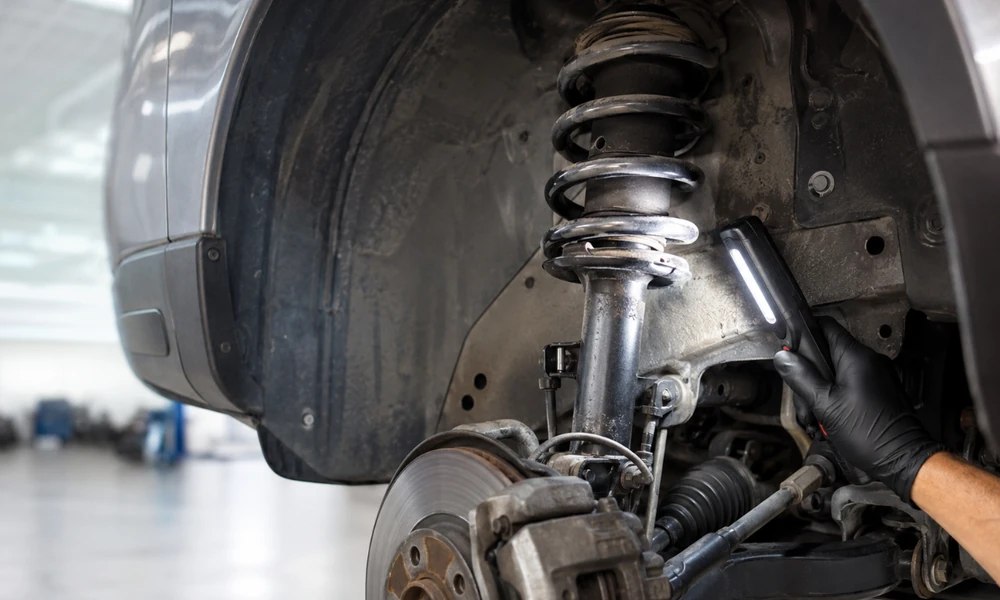
Shocks and struts play a bigger role than many drivers realize. They do more than make the ride feel smooth. They help control how your vehicle handles bumps, turns, braking, and uneven roads. When they start to wear out, your car may still drive, but it may not feel as stable or safe as it should.
That is why it helps to know the warning signs early.
Shocks and struts are part of the suspension system. Their job is to control movement. When your tires hit a bump, the springs absorb the impact. The shocks or struts help keep that movement controlled so the vehicle does not keep bouncing.
One of the most common signs of worn shocks or struts is a bouncy ride. If your car continues to bounce after hitting a bump, the suspension may not be controlling movement properly. A healthy suspension should settle quickly. If the car feels floaty, loose, or unstable, it is worth having it checked.
Another warning sign is nose-diving when braking. This happens when the front of the vehicle dips down more than normal during a stop. It can make braking feel less controlled. In some cases, worn shocks or struts may increase stopping distance because the tires are not staying firmly planted on the road.
You may also notice body roll when turning. If the vehicle leans too much during corners, the suspension may be weak. This can make the car feel harder to control, especially during quick turns or emergency movements.
Uneven tire wear is another clue. Bad shocks or struts can cause tires to bounce slightly as you drive. Over time, this may create cupping or patchy wear on the tread. If your tires look uneven or feel noisy on the road, the suspension should be inspected along with the tires and alignment.
Strange noises can also point to suspension trouble. Clunking, knocking, or rattling over bumps may mean something is loose or worn. Sometimes the noise comes from the strut mount, bushings, or other suspension parts. The sound may start small, then become more noticeable over time.
Fluid leaks are another sign. Many shocks and struts contain hydraulic fluid. If you see oily residue on the outside of the shock or strut, it may be leaking. A light film may not always mean failure, but heavy leaking usually means the part is no longer working as it should.
Poor handling is also important. If the vehicle feels like it drifts, sways, or does not respond cleanly when steering, the suspension may be part of the problem. This can become more noticeable at highway speeds or on rough roads.
You might also feel more vibration than usual. Some vibration comes from tire or wheel issues, but worn suspension parts can make it worse. When shocks or struts cannot control movement, bumps and road texture transfer into the cabin more strongly.
A simple bounce test can give you a basic clue. Press down firmly on one corner of the vehicle and release it. If the vehicle bounces several times before settling, the shocks or struts may be worn. This test is not perfect, but it can help you spot obvious problems.
It is also important to remember that shocks and struts wear slowly. Many drivers get used to the change because it happens over time. The ride may feel normal until they drive another vehicle or replace the worn parts.
Driving with bad shocks or struts can affect comfort, control, tire wear, and braking. It can also put extra stress on other suspension parts. Waiting too long may turn a simple repair into a larger one.
If your car bounces, leans, dives during braking, wears tires unevenly, or makes noise over bumps, have the suspension inspected. Catching the problem early helps keep your vehicle safer, smoother, and easier to control.
Good shocks and struts help your tires stay connected to the road. That connection matters every time you steer, stop, or hit a rough patch of pavement.
This post was written by a professional at Tires2Go Florida. Tires2Go Florida is a trusted automotive service center located in Pinellas Park, Florida, serving drivers across St. Petersburg, Tampa, Clearwater, and Largo. Our certified mechanics handle tire shop Tampa and wheel replacement, brake service, suspension repairs, oil changes, wheel alignments, tire balancing, and road force balancing. We also specialize in ADAS calibration, suspension modifications, lift kits, and lowering kits using quality parts and modern diagnostic equipment. From routine maintenance to advanced automotive services, Tires2Go Florida provides dependable solutions and tires for sale for vehicles throughout the Tampa Bay area.
