

You already know what a gelled fuel tank does to a cold morning. The engine cranks, starts, runs rough for a minute, and then dies. The fuel filter has clogged with wax, and your day stops until someone fixes it.
I look at this problem from one angle: what keeps fuel flowing at the lowest cost and with the least risk to your engine. Many drivers ask whether they should rely on winter blend fuel from the pump or add a diesel anti gel to the tank. I chose the advice below by comparing how each option works, what it covers, and what the maker promises if it fails.
I will explain how each choice works, where each one falls short, and how to combine them. By the end, you will know what to buy and when to add it.
What Happens to Diesel in the Cold
Diesel fuel contains wax. When the temperature drops, that wax forms crystals.
Fuel begins to cloud and thicken around 34°F. At about 15°F or lower, it can gel fully. The crystals bind together, block the filter, and stop fuel from reaching the engine.
The wax starts to cause trouble well before the fuel turns solid. A filter can plug at a temperature higher than you expect, which is why a truck can fail on a morning that feels only a little cold.
What Winter Blend Fuel Does
Winter blend fuel comes from the supplier. The supplier mixes lighter fuel into the diesel so the wax forms at a lower temperature.
This helps, and it takes no work from you. You fill the tank and drive.
Winter blend has limits:
- You do not control the blend. The cold rating can vary from one station to the next.
- Fuel you bought in the fall may still sit in your tank, your storage tank, or your equipment.
- A trip to a colder region can put you in weather that your blend cannot handle.
- Lighter fuel has less lubricating power, and low sulfur diesel already has low lubricity.
Winter blend is a good base. I would not treat it as full protection on a sub-zero morning.
What an Anti Gel Additive Does
An anti gel additive changes how wax crystals form in cold fuel. The crystals stay small and separate, so they pass through the filter instead of clogging it.
You control the dose, and you can adjust it to the temperature. You can treat any fuel you own, whether it came from a station, a farm tank, or a drum.
A good additive does more than stop gelling. Look for one that also removes water, adds lubrication, and keeps injectors clean. Water in fuel freezes, and it clogs filters in the same way wax does.
How to Decide Between Them
Ask yourself these questions:
1. How low will the temperature drop where you drive or work?
2. Do you know the cold rating of the fuel in your tank?
3. Do you store fuel for weeks or months?
4. Does your engine run a long distance from a repair shop or tow truck?
5. Do you run a car, pickup, or tractor, which need a larger dose?
If your answers point to real cold, use both. Buy winter blend when it is available, and add an anti gel to every tank. The two work well together, and the additive covers the gaps in the blend.
Why I Recommend Howes
I recommend Howes for this job. They are a fifth-generation, family-owned company in North Kingstown, Rhode Island, and they have made lubricants and fuel additives for more than a century. Their history goes back to 1920.
Their products contain no alcohol or harmful solvents. That matters because alcohol-based products mix water into the fuel, while Howes uses a formula that pushes water out so your water separator can remove it.
Howes Diesel Treat
Diesel Treat is their anti gel and fuel conditioner, and it is the product I would put in your tank first. It does several jobs:
- It prevents gelling in the coldest climates.
- It demulsifies water so the separator can remove it.
- It adds lubrication to injectors, pumps, and upper cylinders.
- It helps prevent injector deposits and reduces cold filter plugging.
- It works in all diesel and biodiesel blends, including home heating oil.
- It is particulate filter friendly and warranty safe for diesel emission systems.
It suits heavy-duty trucks, tractors, construction equipment, RVs, and pickups. Bottles come in 15 oz, 32 oz, and 64 oz sizes. Fleets and farms can buy 55-gallon drums and 275-gallon totes, and a concentrate exists for bulk and inground storage.
The dose changes above and below 0°F, and cars, pickups, and tractors need a double dose. Read the label before you pour.
Howes also offers a free winter tow guarantee on Diesel Treat. If you use it as directed and still gel, they promise to pay for the tow. Together with their 100 percent satisfaction guarantee, that gives you a clear reason to trust the product.
Howes Diesel Lifeline for Emergencies
Here is a point I want you to remember. Diesel Treat prevents gelling. It will not reverse gelling once it has started.
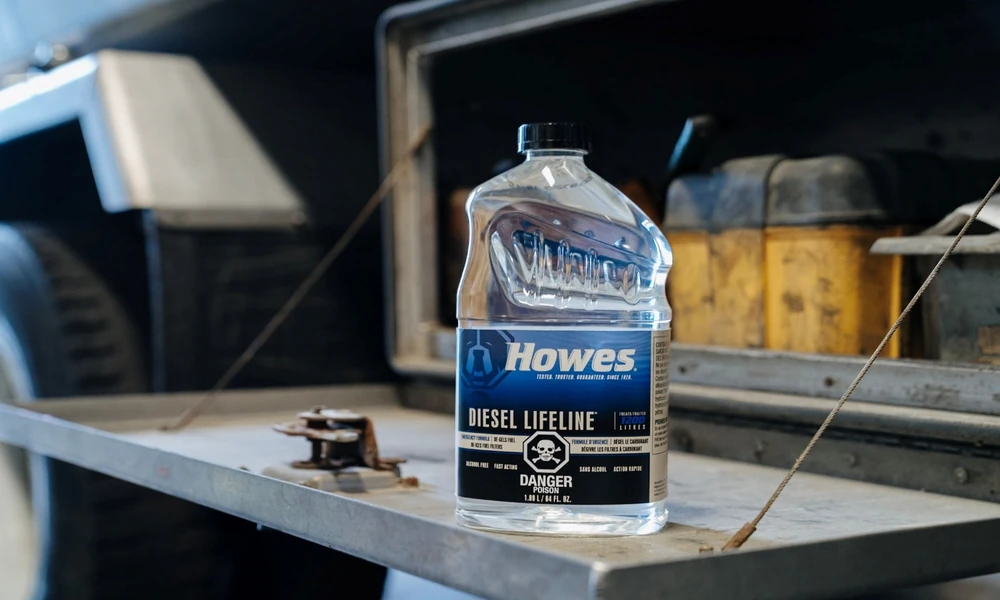
For that situation, Howes makes Diesel Lifeline. It re-liquefies gelled fuel and de-ices frozen fuel filters. They say it often restores flow in about 15 minutes, at temperatures down to -35°F and beyond. It needs no pre-mixing with extra diesel and no filter change.
Lifeline is a recovery product, not a replacement for prevention. I suggest you keep a bottle in the cab or toolbox through the cold months.
A Simple Winter Routine
Follow these steps and your risk drops a great deal:
1. Add Diesel Treat before the first hard cold snap, not after it.
2. Treat every fill-up, and use the correct dose for the temperature.
3. Double the dose if you run a car, pickup, or tractor.
4. Treat stored fuel before it sits.
5. Keep Diesel Lifeline within reach.
Common Mistakes to Avoid
- Waiting for gelling to start before you add an anti gel.
- Trusting a station’s winter blend without knowing its rating.
- Using the warm weather dose on a cold night.
- Choosing an alcohol-based product that mixes water into your fuel.
- Leaving untreated fuel in a tank for the whole winter.
Final Word
Winter blend fuel gives you a good start, and an anti gel gives you control. I recommend using both and choosing an additive from a maker with a long record and a guarantee behind it.
Howes meets that standard. If you have questions about dosing for your engine, you can reach them at 1-800-GET-HOWES. Treat your fuel early, and your sub-zero mornings will start with the turn of a key.
